

WW2 Researched 4 Piece British Medal Bar (Norway 1940 and later on Palestine)
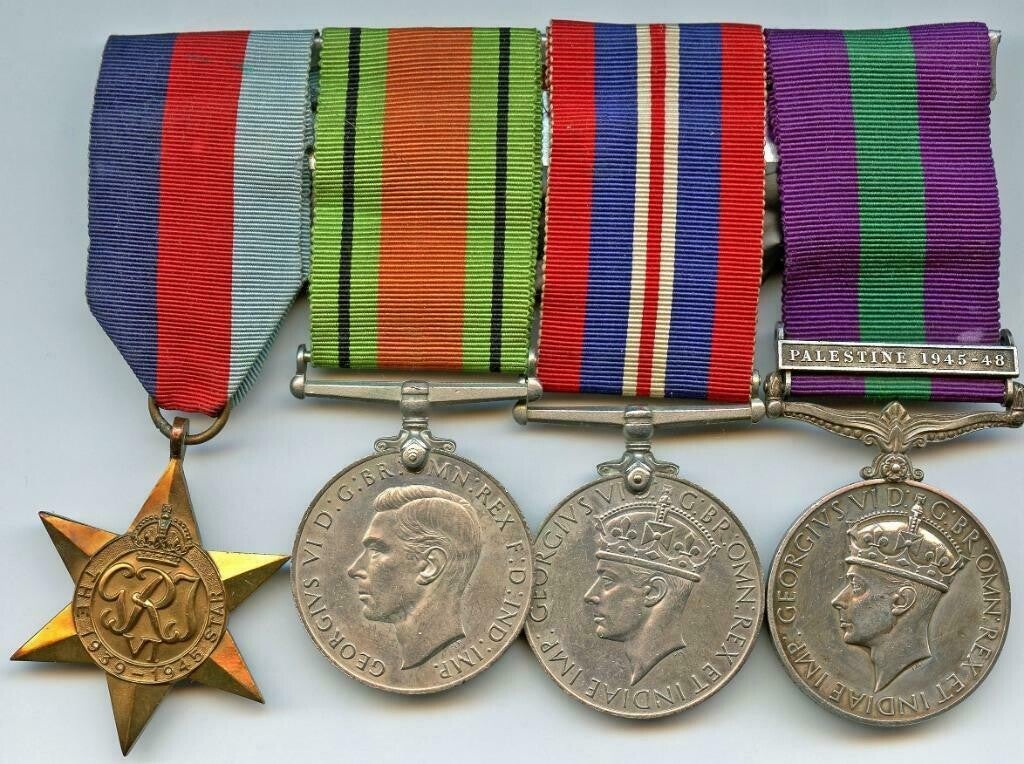
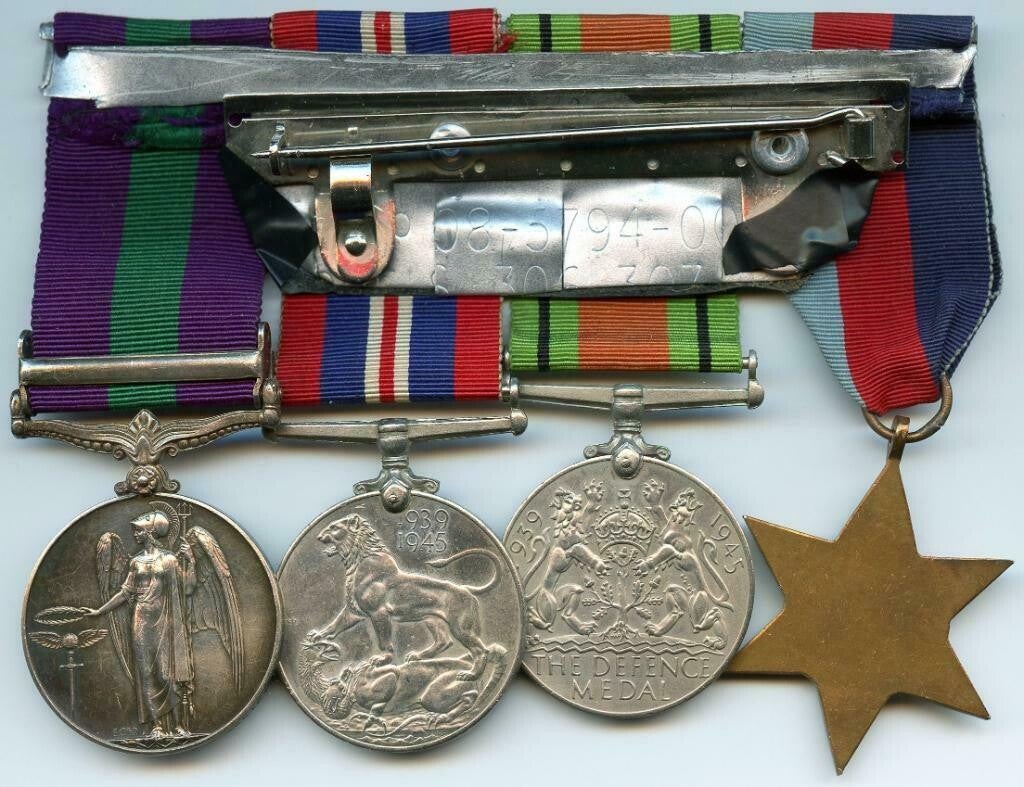
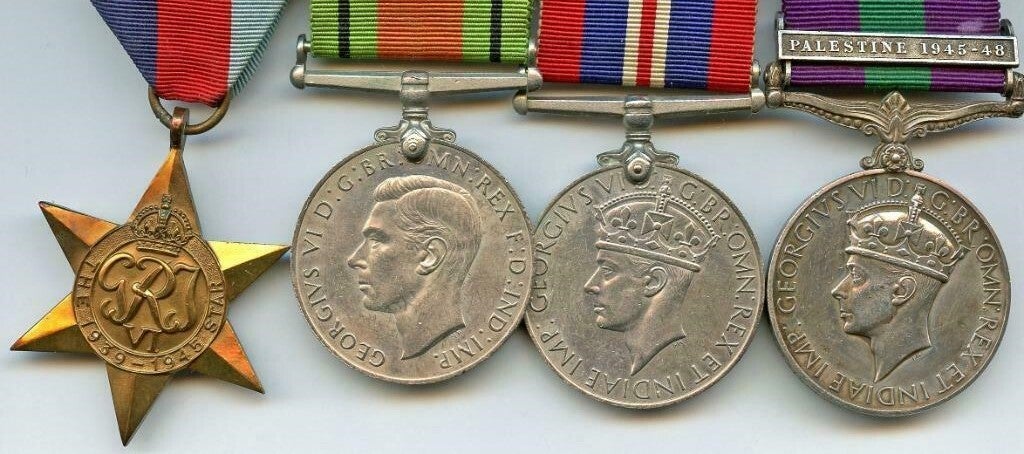
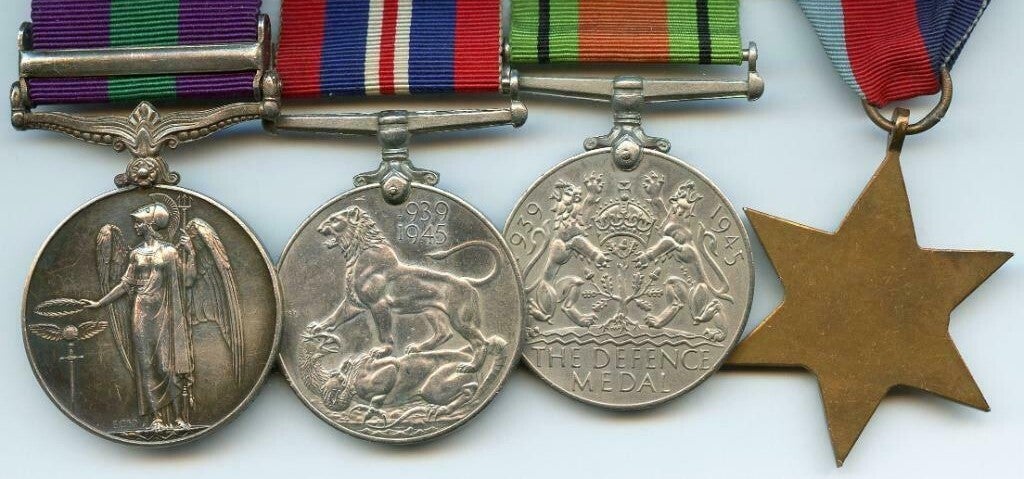
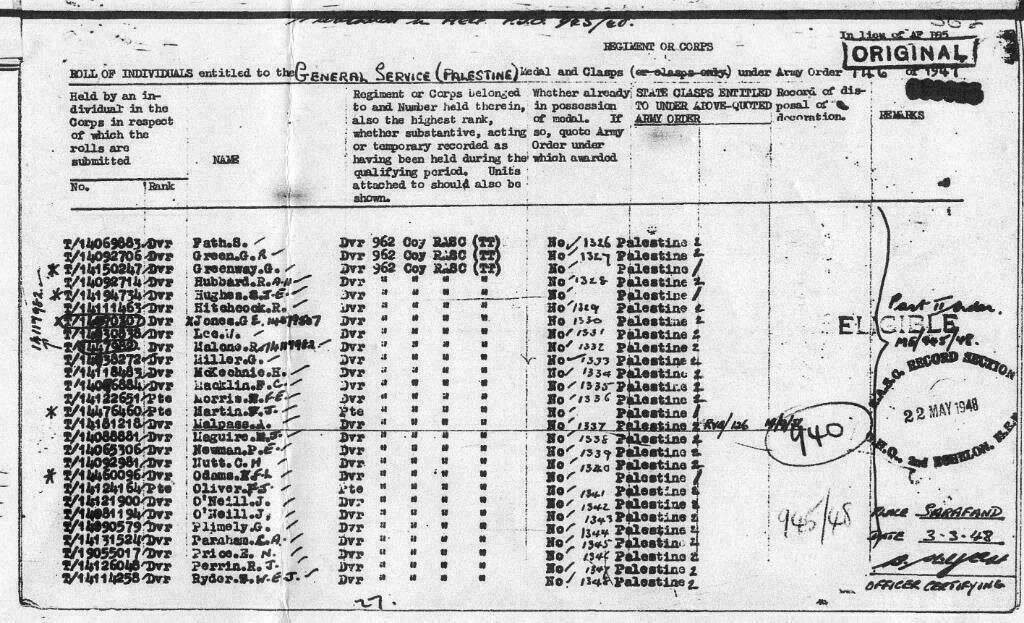
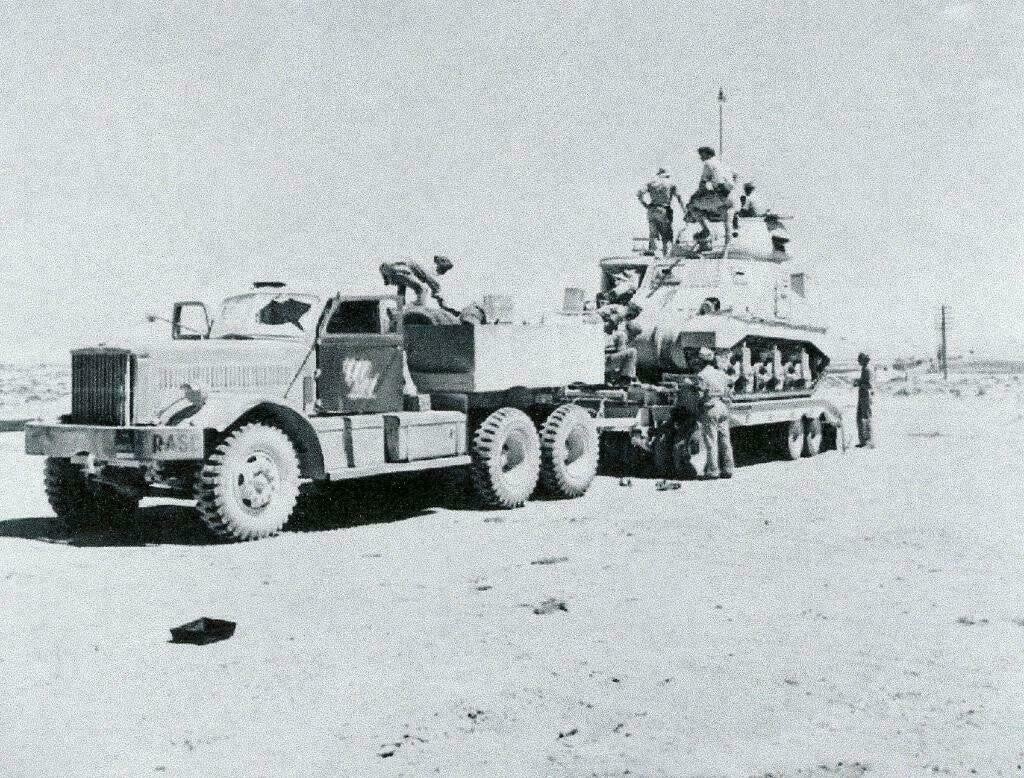
A very interesting, complete medal set which belonged to an English soldier who was wounded during the German invasion of Norway to such an extent that he would serve on the home front for the rest of the war, but nevertheless would also serve in the army during the post-war period. Below is a short biography and a description of the medal set itself.
The medal set belonged to Cyril Arthur, who was born in London in October 1907 as the son of a gold and silver engraver who worked for a pen maker. By 1939 he was living in London with his wife and two children and Cyril Arthur was working as a Skilled Wokrman/Telecommunications Installer for the Engineering Department of the Post Office before enlisting in the British Army in September 1939 and joining the 2nd Battalion, South Wales Borderers.
By this time, the unit was stationed in Derry, Northern Ireland, under the command of the Northern Ireland District. The battalion left Northern Ireland in December and was assigned to the 148th Infantry Brigade. In April 1940, however, it was assigned to the newly established 24th (Guards) Brigade under the command of Brigadier William Fraser DSO MC. This brigade was again under the command of Rupertforce, which was under the command of Major-General Pierse Joseph Mackesy CB DSO MC. As part of Rupertforce, the battalion landed in Narvik on 15 April 1940, making it one of the first British units to fight against the German army during the Second World War.
On 13 May 1940, the 2nd Battalion, South Wales Borderers, fought alongside a battalion of the French Chausseurs Alpins in Ankenes in the Nordland region. During a battle with German elements, Cyril Arthur was so seriously wounded that he was hospitalized in Norway for the remainder of the military operations and was evacuated along with his entire brigade on June 8 and transferred to England. Due to his injury, he was eventually deemed unfit for further active military service at the front and was deployed to the Royal Army Service Corps at a Transport Company on the Home Front in the rank of Driver. He held this position until the end of the war and for his service during the war he was eventually awarded the 1939-45 Star, Defence Medal and War Medal.
However, he continued to serve in the Royal Army Service Corps after the war and was sent with his unit to Mandatory Palestine between 1945 and 1948. In the meantime, his company had been transformed into a Tank Transport Company and was stationed in the area of Sarafand al-Amar, an area where many disturbances took place and where the British had a military base. On the morning of January 2, 1948, Arab workers at the British army camp discovered twelve bombs that would go off at noon, just as they were to come to collect their wages. A Palestinian newspaper implied that the Zionists were behind this and that they had warned the Jewish workers at the camp, as none of them came to collect their wages that day.
On April 15, 1948, some soldiers of the Haganah carried out an attack on the village. According to a report by the New York Times, they managed to penetrate deep into Palestinian territory and destroyed a three-story building. Sixteen people were killed. The Haganah indicated that the building was used as a base for the Holy Struggle army of Hasan Salama, leader of the Palestinian Guerrilla of the Jaffa District. Finally, in May 1948, the British decided to leave the area and handed over the military base to the Palestinians.
Soon, however, it was captured by troops of the Givati Brigade during Operation Barak, as well as the village of the same name on which a gigantic military complex was to be built, the civilian population of the village was eventually expelled. For his military service in this area, Cyril Arthur was eventually awarded the General Service Medal 1918-1962 with "Palestine 1945-48" Buckle. Cyril Arthur eventually died in January 1985 in Kent, he worked as a Telephone Engineer after his military service.
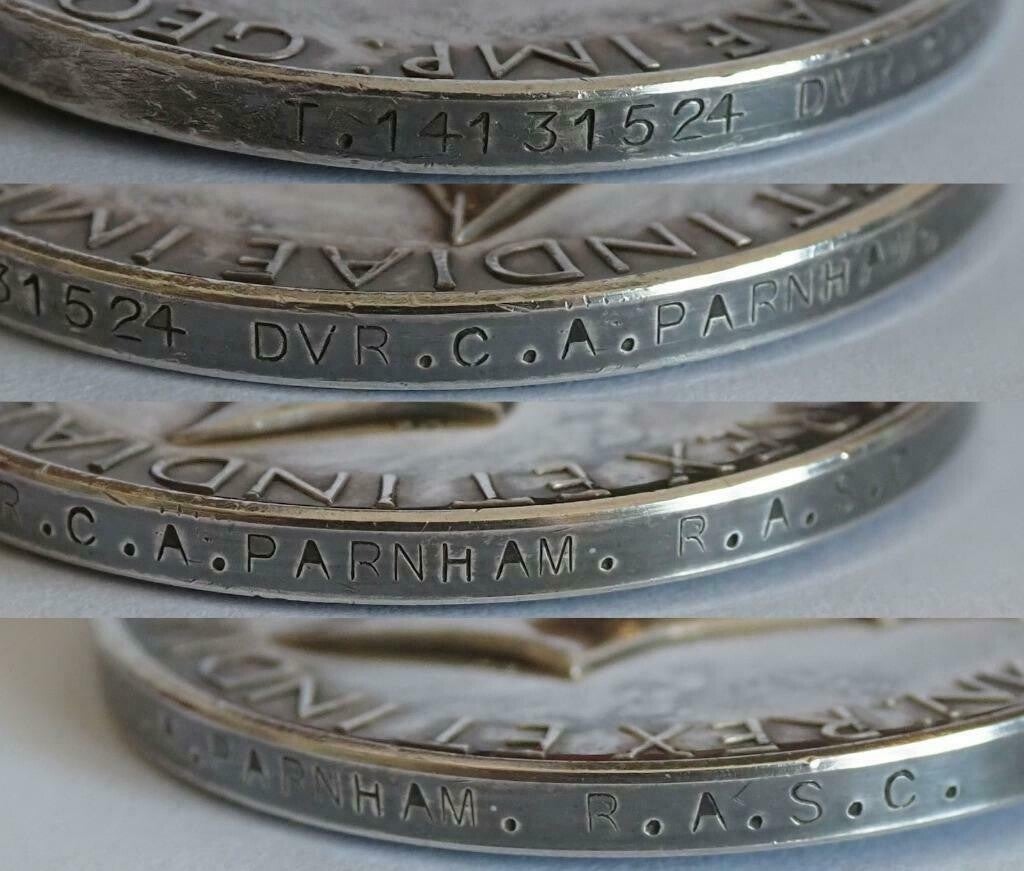
The medal set consists as described above of his 1939-45 Star, Defence Medal, War Medal and General Service Medal 1918-1962 with "Palestine 1945-48" buckle. All are made up in the so-called 'swing style'. The medals are in very good condition and the General Service Medal has a correct government engraving with its service number, rank, initials, surname and army unit. His medals for his service during the Second World War are (also correctly) not engraved. An exceptionally interesting set that deserves further investigation.
(This set originates from our private collection)